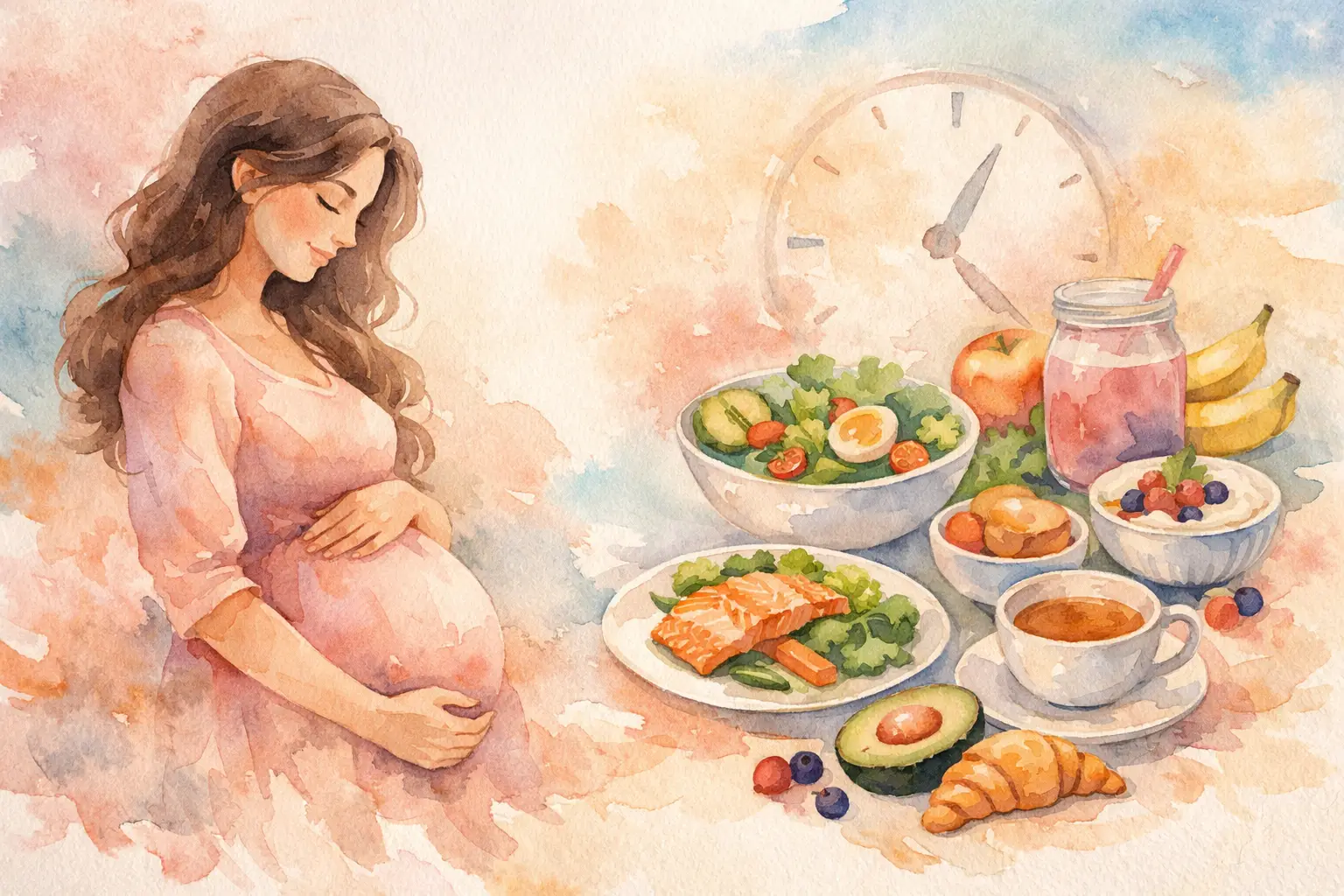
Pregnancy hunger does not always arrive neatly at breakfast, lunch and dinner. For many women, one week brings constant nausea, the next brings a sharp 4 pm energy dip, and later months can make a full plate feel uncomfortable. This guide to pregnancy meal timing focuses on a more useful goal than following a strict clock: eating often enough to feel nourished, steady and comfortable throughout the day.
You do not need to eat for two, skip meals to control weight gain, or force yourself into a routine that does not suit your workday. The right pattern depends on your trimester, appetite, activity level, medical history and foods you can realistically tolerate. A personalised plan can make the difference between simply getting through the day and feeling better supported by your meals.
Why meal timing matters during pregnancy
Your body is working continuously to support your baby’s growth, while your blood volume, energy needs and digestion are changing. Long gaps between meals may leave you shaky, tired, nauseous or overly hungry by evening. They can also make it harder to build balanced meals, because extreme hunger often leads to whatever is quickest rather than what feels satisfying.
Regular meals and planned snacks can help keep energy more even, support adequate nutrient intake and reduce the temptation to rely on sugary tea, biscuits or packaged snacks for a quick boost. Timing is especially relevant if morning sickness, heartburn, constipation, gestational diabetes, anaemia, thyroid concerns or a demanding commute are part of your pregnancy.
This is not about eating every two hours because a chart says so. It is about creating a dependable rhythm so that your body is not left running on empty.
A practical guide to pregnancy meal timing
For most women, three balanced meals plus one to three snacks works well. This gives you regular opportunities to include protein, fibre-rich carbohydrates, healthy fats, fruit and vegetables, calcium-rich foods and fluids without making each meal uncomfortably large.
Start the day before hunger becomes urgent
If you wake up hungry, nauseous or light-headed, try not to postpone breakfast for several hours. A small early bite can be enough at first: a banana with a few nuts, plain toast with peanut butter, a small bowl of porridge, or a couple of crackers before getting out of bed if nausea is strong.
When your appetite settles, follow with a more complete breakfast. Poha with peas and curd, vegetable upma with a boiled egg, besan chilla with paneer, or oats with milk, fruit and seeds can all provide a steadier start than tea and biscuits alone. If you have an early office commute, prepare something portable the night before rather than hoping you will find a balanced option later.
Avoid long gaps through the afternoon
A gap of more than four to five hours without food is often where energy and appetite become difficult to manage. For a typical working day, this may mean breakfast, lunch, a mid-afternoon snack and dinner. If you eat dinner late because of travel or family routines, an additional evening snack may help prevent arriving at dinner ravenous.
Think of snacks as mini meals, not an afterthought. Fruit with yoghurt, roasted chana with a guava, a cheese sandwich on wholegrain bread, sprouts chaat, milk with dates, or hummus with vegetables offer more staying power than crisps or sweets. Pairing carbohydrate with protein or fat helps you feel satisfied for longer.
If lunch is available only at a fixed office time, use the snack before or after it to make the schedule work. Consistency matters more than eating at a perfect hour.
Make dinner comfortable, not oversized
As pregnancy progresses, your growing uterus can leave less room in your stomach. A very large dinner may worsen bloating, reflux or poor sleep, particularly if you lie down soon afterwards. Instead, aim for a moderate evening meal with dal, vegetables, curd and roti or rice, or another familiar balanced combination that feels easy to digest.
Try to finish dinner around two to three hours before bed where possible. If hunger returns later, a light snack such as warm milk, yoghurt, fruit with nuts, or a small bowl of makhana may be more comfortable than ignoring it. Hunger at night is a signal worth responding to, not a test of willpower.
Adjust timing for each trimester
First trimester: eat for nausea management
In early pregnancy, appetite can be unpredictable. Empty stomach nausea is common, so smaller meals every two to three hours may feel better than facing three large meals. Dry, plain foods can be helpful first thing, but do not let them become your only nutrition for the day if you can tolerate more variety later.
Keep easy options nearby, especially during long meetings or travel. Cold foods may be more appealing when cooking smells trigger nausea. Sipping fluids between meals rather than drinking a large amount with food can also feel easier for some women. However, frequent vomiting, inability to keep fluids down, dizziness or reduced urination needs prompt medical advice.
Second trimester: build a dependable routine
Many women find their appetite improves during the second trimester. This is a good time to establish a meal pattern that includes regular protein and iron-rich foods, rather than trying to compensate for a difficult first trimester with overeating.
Plan ahead for your busiest hours. A snack packed in your handbag can prevent a missed meal when work runs late. Include foods such as pulses, eggs, dairy, fish low in mercury where suitable, lean meat if you eat it, leafy vegetables, beans, nuts and seeds across the week. Variety is more valuable than perfection in any single meal.
Third trimester: smaller, more frequent meals may help
Late pregnancy often brings heartburn, fullness and slower digestion. Splitting your usual intake into smaller meals can ease discomfort while still meeting your needs. Avoid lying down just after meals, and notice whether very spicy, fried or heavy foods worsen reflux for you.
Constipation can also affect appetite and comfort. Regular meal timing, enough water, fruit, vegetables, wholegrains and movement approved by your healthcare provider can support bowel regularity. Do not suddenly increase fibre dramatically without fluids, as this may make bloating worse.
When timing needs medical support
Pregnancy meal timing should be more structured if you have gestational diabetes, pre-existing diabetes, significant nausea, anaemia, high blood pressure, thyroid disease, multiple pregnancy or a history of eating difficulties. In these situations, the amount and type of carbohydrate at each meal matters alongside timing, and generic advice may not be enough.
For gestational diabetes, skipping meals is not a useful strategy. Many women do better with evenly spaced meals and snacks that combine high-fibre carbohydrates with protein, but blood glucose targets and meal distribution must be guided by your maternity team or dietitian. A nutrition plan should fit your readings, medication if prescribed, cultural food preferences and daily routine.
Similarly, if you are gaining weight very quickly, gaining very little, or feeling anxious about food, do not respond by restricting without professional advice. Pregnancy is not the time for detoxes, fasting plans or aggressive weight-loss diets. The aim is appropriate nourishment for you and your baby.
Make the routine realistic enough to keep
The best schedule is one you can follow on a Tuesday when you are tired, commuting and not in the mood to cook. Batch-cook a simple dal, keep curd and fruit at home, carry nuts or roasted chana, and choose one or two breakfasts you genuinely enjoy. These small systems reduce the pressure to make perfect food decisions when you are already managing pregnancy changes.
Pay attention to patterns for a week. Note when nausea peaks, when hunger becomes intense, which meals leave you energised and which trigger heartburn. That information is far more useful than copying another person’s meal plan. At LivFit Today, pregnancy nutrition support is built around those real-life details, so your plan can support your health without turning food into another source of stress.
Your body is already giving you useful feedback. Meet it with regular nourishment, flexible planning and the confidence that a balanced routine can grow with you through every stage of pregnancy.