A bowl of mango, a banana on the way to work, or a late-night apple can cause unnecessary worry when you are managing blood glucose. Yet fruit and diabetes are not opposing forces. For most people with diabetes, fruit can remain a nourishing, enjoyable part of everyday eating – when the type, portion, timing and overall meal pattern are considered.
The goal is not to fear natural foods or follow a restrictive diet that feels impossible to sustain. It is to create meals that support steadier blood glucose, energy levels and long-term health while still fitting around family meals, office days and social occasions.
Fruit and diabetes: why the relationship is not so simple
Fruit contains natural sugars, but it also provides fibre, water, vitamins, minerals and protective plant compounds. The fibre in whole fruit slows digestion compared with sugary drinks, sweets or fruit juice. That difference matters: eating an orange is not the same as drinking a glass of orange juice.
Your body also responds to fruit in context. A ripe banana eaten alone when you have skipped lunch may affect your glucose differently from half a banana eaten with plain yoghurt and nuts after a balanced meal. Sleep, stress, activity levels, medication, insulin resistance and portion size all play a role.
This is why blanket rules such as never eat bananas or avoid mangoes completely rarely help. They can make healthy eating feel punitive and may lead to cravings or all-or-nothing choices later. A more useful approach is learning how to include fruit in quantities that work for your body and your diabetes plan.
Choose whole fruit most often
Whole, fresh fruit is usually the best starting point because it contains fibre and naturally limits how quickly you can eat it. Fruits with edible skins, seeds or segments can be particularly satisfying, including apples, pears, guava, oranges, berries, plums and pomegranate.
That does not mean other fruits are forbidden. Mango, grapes, chikoo, lychee, banana and pineapple can all fit into a diabetes-friendly routine. They simply deserve more attention to portion size, especially if your blood glucose tends to rise after meals.
Fruit juice is different. Juicing removes much of the fibre, and it is easy to drink the equivalent of several fruits in minutes. Even fresh homemade juice can cause a quicker rise in blood glucose. If you enjoy juice occasionally, keep the serving small and have it with a meal rather than using it as a stand-alone drink. For everyday hydration, water, soda water, unsweetened chaas or herbal tea are better choices.
Dried fruit is nutritious but concentrated. A few raisins, dates, dried figs or apricots contain less water and can add up quickly. They can be useful around exercise for some people, but they are not usually the easiest everyday snack for glucose management.
Portion size matters more than a perfect fruit list
There is no single portion that suits everyone. Your meal plan should account for your body weight, activity, medication, goals and usual glucose readings. Still, these practical examples can help you visualise a typical single fruit serving:
- One small apple, orange, pear or guava
- One small banana, or half a large banana
- One cup of papaya, watermelon, muskmelon or berries
- Half a cup of mango, grapes, pomegranate arils or pineapple
These are guides, not strict limits. A person who walks regularly, strength trains or uses insulin may need a different carbohydrate distribution from someone who is largely sedentary and trying to reduce weight. If you use rapid-acting insulin, do not change carbohydrate portions without understanding how it affects your prescribed dose.
It is also worth checking what one serving looks like in your own bowl. Large café smoothie bowls, fruit platters and generous home portions can contain two or three servings before toppings are added. The issue is not the fruit itself; it is the total carbohydrate load and how often it appears through the day.
Pair fruit with protein or healthy fats
One of the easiest habits for fruit and diabetes is to avoid treating fruit as a sugary snack that must be eaten on its own. Pairing it with protein, fibre or healthy fats can improve fullness and may support a gentler glucose response.
Try an apple with a small handful of almonds, guava with roasted chana, papaya with plain Greek yoghurt, or berries stirred into unsweetened curd. A small banana with peanut butter can work well before or after exercise, depending on your activity and individual glucose response.
Be mindful of additions that turn a simple snack into a dessert. Sweetened yoghurt, honey, chocolate spread, granola with added sugar and flavoured protein powders can contribute more sugar than the fruit. A balanced snack should feel satisfying without relying on extra sweetness.
Timing can make a difference
Many people do well with fruit between meals, as part of breakfast, or alongside a planned snack. Others notice better readings when fruit is eaten after a balanced lunch rather than first thing in the morning. There is no universal best time, but there are a few patterns worth avoiding.
Try not to eat large bowls of fruit late at night simply because you are hungry or craving something sweet. That hunger often signals that dinner lacked enough protein, vegetables or slow-release carbohydrates. Addressing the meal pattern is more effective than repeatedly relying on fruit to manage evening hunger.
Breakfast also deserves attention. Fruit alone is rarely a complete breakfast for diabetes management. Add protein and fibre through eggs, paneer, unsweetened yoghurt, dal chilla, oats, nuts, seeds or a balanced vegetable-based meal. This can help you stay fuller through a demanding workday.
Use your glucose readings as useful feedback
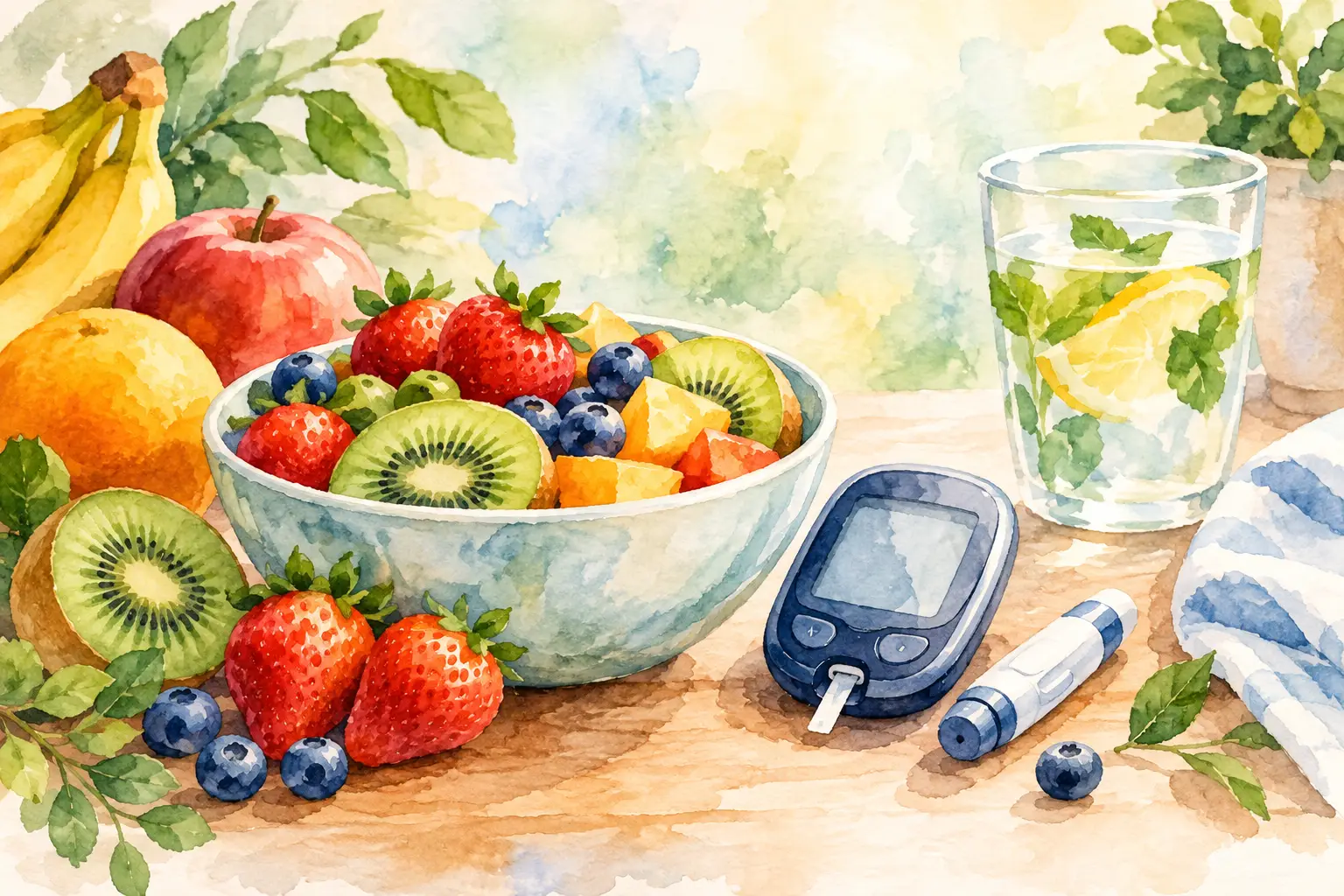
A glucose monitor can help move the conversation beyond guesswork. If your clinician has advised home monitoring, note your reading before a meal and at the time recommended after eating. Record the fruit, portion, what you ate with it, your activity and how you felt.
Do this for a few occasions rather than judging a food from one unusual day. Poor sleep, illness, stress, a restaurant meal or limited movement can influence readings. You may find that a modest portion of mango after lunch works well, while grapes eaten alone in the afternoon do not. That is valuable information, not a reason to feel discouraged.
HbA1c remains an important longer-term marker, but daily habits and patterns are where meaningful change happens. Better glucose management is built meal by meal, not by one perfect fruit choice.
When you need more personalised guidance
Fruit choices may need extra care if you have gestational diabetes, chronic kidney disease, digestive concerns, frequent hypos, or take insulin or glucose-lowering medicines. People with kidney disease, for example, may need individual advice about potassium as well as carbohydrate. During pregnancy, regular meal timing and glucose targets become especially important.
If you are newly diagnosed, struggling with high readings despite trying to eat well, or feel confused by conflicting advice online, a personalised meal plan can bring clarity. A dietitian can assess your medication, cultural food preferences, work schedule, weight goals and blood results rather than handing you a generic list of foods to avoid.
At LivFit Today, our approach is built around sustainable meals that work in real life – not starvation diets or unrealistic rules. The right plan can include the fruits you enjoy while supporting measurable improvements in your health.
Fruit does not need to disappear from your plate. Start with a sensible portion, choose whole fruit, pair it well and pay attention to your own response. Small, consistent adjustments can make eating for diabetes feel more confident, flexible and enjoyable.