The 4 pm biscuit run is rarely about hunger alone. After hours of meetings, screens and sitting still, your brain wants a quick lift. Choosing the best snacks for office workers can help you stay focused, prevent extreme hunger at dinner and support weight management without turning your workday into a strict diet plan.
The aim is not to eat less at all costs. It is to eat in a way that keeps energy more stable. A well-chosen snack can bridge a long gap between meals, especially when lunch was light, late or eaten between calls. The difference lies in choosing food that satisfies you rather than sending you back to the pantry 20 minutes later.
What makes a good office snack?
Most office snacks work best when they include protein, fibre or healthy fats, ideally with a source of natural carbohydrate. This combination digests more gradually than sweets, crisps or sugary drinks, helping you feel full and alert for longer.
Think of fruit with nuts, yoghurt with seeds, or wholegrain crackers with a protein-rich topping. Portion size matters too. A snack should take the edge off your hunger, not replace a balanced meal unless your schedule genuinely requires it.
There is no single perfect option for everyone. Someone heading to the gym after work may need more carbohydrate, while a person managing diabetes, thyroid concerns or a weight-loss goal may benefit from a more tailored approach. Your medical history, medication, activity level and usual meals all matter.
12 best snacks for office workers
1. Fresh fruit with a small handful of nuts
An apple, pear, orange or banana paired with almonds, walnuts or peanuts is one of the simplest desk-friendly choices. Fruit provides fibre and natural sweetness, while nuts add satisfying fats and a little protein. Keep the nut portion to a small closed handful, as they are nutritious but energy dense.
2. Greek yoghurt with seeds
Plain Greek yoghurt is a useful high-protein snack when you have access to an office fridge. Add chia seeds, pumpkin seeds or a few berries for texture and fibre. Choose unsweetened yoghurt where possible, then add fruit or cinnamon rather than relying on flavoured varieties with added sugar.
3. Roasted chana or chickpeas
Roasted chana is affordable, portable and particularly practical for busy workdays. It offers fibre and plant protein, making it far more filling than a packet of crisps. Choose plain or lightly seasoned versions when possible, as heavily salted options can work against blood pressure goals.
4. Vegetable sticks with hummus
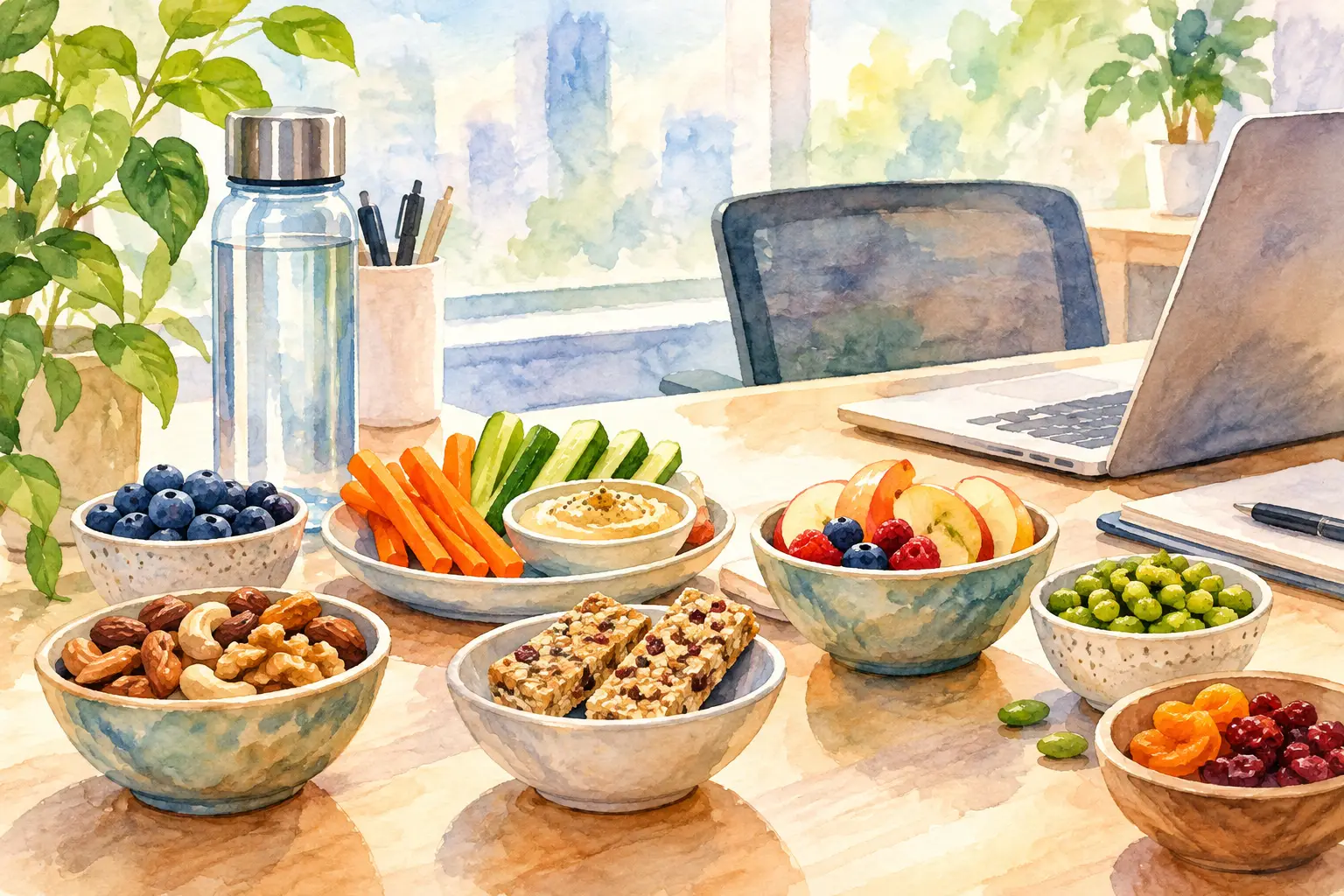
Carrot, cucumber, pepper and celery sticks bring crunch without the post-snack heaviness. Hummus adds protein and healthy fats, which makes the snack more satisfying than vegetables alone. Prepare a small container the night before so convenience does not send you towards the vending machine.
5. Wholegrain crackers with paneer or cheese
Wholegrain crackers topped with paneer, cottage cheese or a small amount of cheese can be a satisfying savoury option. This works well for people who do not enjoy sweet snacks and need something substantial between a light lunch and a late commute. Keep an eye on portions, particularly with cheese, and choose lower-salt options if advised by your clinician.
6. A boiled egg with fruit
A boiled egg is compact, protein-rich and far more filling than most packaged snack bars. Pair it with a piece of fruit for a balanced mix of protein, fibre and carbohydrate. If you share a close office space, store it securely and be mindful of colleagues who may be sensitive to food smells.
7. Homemade trail mix
A simple mix of unsalted nuts, seeds and a few raisins or dried cranberries can rescue you on days when meetings overrun. The key is making your own mix and carrying a measured portion. Many shop-bought trail mixes contain large amounts of chocolate, sugar-coated fruit or salt, turning a wholesome snack into something closer to confectionery.
8. Makhana with mild seasoning
Roasted makhana, also known as fox nuts, is a light and crunchy choice for those who miss crisps at their desk. Toss it with a little olive oil or ghee and spices such as cumin, pepper or turmeric. It is best enjoyed alongside tea or water, not as a reason to keep grazing through the entire afternoon.
9. Oats or overnight oats
If breakfast often gets missed because mornings are rushed, a small pot of overnight oats can work as a mid-morning snack. Use oats, milk or yoghurt, and fruit or seeds rather than syrupy toppings. This is especially useful on high-activity days, but adjust the portion if you are also having a full breakfast.
10. Edamame or steamed sprouts
Edamame and lightly seasoned sprouts provide plant protein and fibre in one small bowl. They are a strong choice when you want a savoury snack that feels like real food. If raw sprouts do not suit your digestion, choose steamed or cooked sprouts instead.
11. A small smoothie made properly
A smoothie can be convenient, but it should not be only fruit juice and sweetened yoghurt. Blend milk or unsweetened yoghurt with fruit, oats, seeds or nut butter to make it more balanced. It is better to drink it slowly as a planned snack rather than alongside another snack because liquid calories can be easy to overlook.
12. Dark chocolate with nuts
Craving something sweet does not mean you have failed your plan. A small square or two of dark chocolate with a few nuts can feel satisfying and prevent the all-or-nothing mindset that often leads to overeating later. The goal is enjoyment with awareness, not perfection.
Keep desk snacks from becoming all-day grazing
Even nutritious food can become unhelpful when eaten mindlessly while replying to emails. Instead of keeping an open packet beside your keyboard, portion your snack into a bowl or container and take a brief screen break to eat it. This simple habit makes it easier to notice when you are satisfied.
It also helps to identify what your afternoon hunger is telling you. If you are starving by 3 pm every day, the issue may be a breakfast that is too small, a lunch with too little protein, or a gap of six or seven hours without food. Snacks can support a balanced routine, but they cannot fully compensate for skipped meals.
Hydration deserves attention as well. Tiredness, headaches and cravings can sometimes be linked to not drinking enough through the day. Keep water near your desk, and limit the cycle of multiple sugary coffees followed by an energy crash. Tea and coffee can fit into a healthy routine, but try not to use them as a substitute for food when you are genuinely hungry.
How to plan snacks around your workday
Prepare two or three options at the start of the week rather than relying on willpower in the moment. Keep shelf-stable choices such as roasted chana, makhana, nuts and wholegrain crackers in your drawer. Bring chilled choices such as yoghurt, fruit, boiled eggs or vegetable sticks from home when you know you will be in the office.
If you work from home, create the same boundary. Put a planned snack on a plate and step away from your workspace for five minutes. Eating directly from the kitchen cupboard while working blurs hunger, habit and stress.
For people managing conditions such as diabetes, high blood pressure, PCOS or digestive concerns, snack choices may need more individual attention. A personalised plan can help you find portions and timings that support your health goals while still fitting around commutes, family meals and demanding work schedules.
Healthy office eating does not have to mean carrying plain salads or refusing every treat at a colleague’s birthday. Start with one dependable snack you genuinely enjoy, keep it available, and let that small decision make your busy afternoons feel more balanced.