A 4 pm snack can either support your blood pressure goals or quietly work against them. The best snacks for blood pressure are not complicated “diet foods”. They are satisfying, minimally processed choices that help you eat less sodium, get more fibre and potassium, and avoid the cycle of arriving at dinner excessively hungry.
For many busy professionals and families, the challenge is convenience. Packaged namkeen, biscuits, instant noodles and salty crisps may be easy to grab, but they can add a surprising amount of salt to the day. A better snack routine is not about depriving yourself. It is about keeping practical options nearby so healthy choices become the easy choices.
Why snack choices matter for blood pressure
High blood pressure, also called hypertension, is influenced by several factors, including family history, body weight, stress, sleep, activity levels, alcohol intake and overall food habits. Snacks do not determine your blood pressure on their own, but frequent high-salt, highly processed choices can make it harder to manage.
Sodium is the key concern. Salt is a major source of sodium, and many people consume far more than they realise through packaged foods, sauces, bakery items, restaurant meals and savoury snacks. On the other hand, foods naturally rich in potassium, magnesium and fibre can fit well into a blood-pressure-friendly way of eating. Potassium is especially useful because it supports a healthy balance of fluids and sodium in the body.
That does not mean every person needs the same snack plan. Anyone with kidney disease, or who takes medicines that affect potassium levels, should speak with their doctor or dietitian before deliberately increasing high-potassium foods.
10 best snacks for blood pressure
1. Fresh fruit with a small handful of unsalted nuts
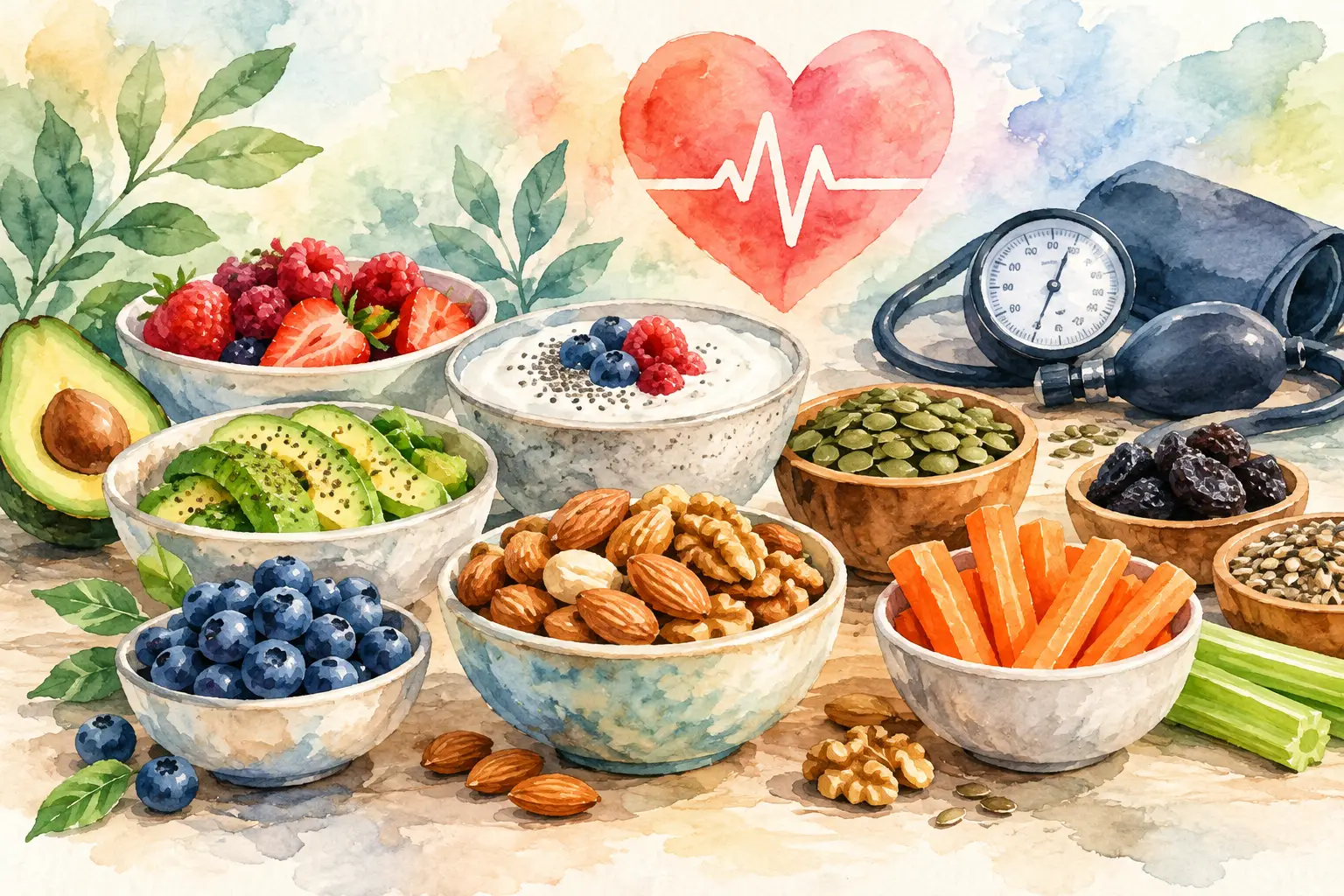
A banana, orange, guava, apple, pear or bowl of papaya paired with unsalted almonds or walnuts makes a filling snack with fibre, natural sweetness and healthy fats. Fruit provides potassium and antioxidants, while nuts help slow digestion so you are less likely to reach for biscuits half an hour later.
Keep the nut portion modest – a small closed handful is usually enough. Salted, honey-roasted and heavily flavoured nuts are not the same choice, as their sodium and added sugar can quickly add up.
2. Plain yoghurt with fruit and seeds
Plain yoghurt or curd is a simple, high-protein base for a satisfying snack. Add chopped fruit and one teaspoon of chia seeds, flaxseeds or pumpkin seeds for extra fibre and texture. This can work particularly well for people who tend to feel hungry between lunch and dinner.
Choose unsweetened yoghurt where possible. Flavoured pots can contain considerable added sugar, while some ready-made toppings are high in salt. If you prefer a savoury option, add cucumber, roasted cumin and coriander rather than a ready-made seasoning mix.
3. Roasted chana or homemade chaat
Roasted chana is affordable, portable and much more filling than a packet of crisps. It provides plant protein and fibre, both of which support steadier energy levels. For variety, combine it with chopped cucumber, tomato, onion, coriander, lemon and a pinch of roasted cumin.
Be careful with packaged chana mixes. Some are coated in salt and spices, so check the label rather than assuming every roasted snack is automatically healthy. Homemade chaat gives you much more control over the salt.
4. Vegetable sticks with hummus
Carrot, cucumber, capsicum and radish sticks bring crunch without the sodium found in many savoury snacks. Pair them with hummus for protein and healthy fats. It is a useful desk-side option if afternoon cravings are usually more about wanting something crunchy than genuinely needing a large meal.
Shop-bought hummus can vary widely in sodium, so compare labels or make a simple version at home with chickpeas, lemon, garlic, tahini and minimal salt. Even a small bowl makes an enjoyable, nourishing snack.
5. Oats or vegetable poha
A small bowl of vegetable poha or savoury oats can be a smart snack when you need something warmer and more substantial. Add peas, carrots, beans, onion, curry leaves and lemon for flavour. These foods offer fibre and can prevent impulsive ordering of fried snacks later in the evening.
The difference lies in preparation. Go easy on salt, avoid packaged seasoning sachets and use vegetables, herbs, mustard seeds, ginger and lemon to build flavour. A little roasted peanut can make the bowl more satisfying.
6. Unsalted makhana
Makhana is light, crunchy and easy to season at home. Dry roast it with a little olive, mustard or groundnut oil, then add black pepper, turmeric, chilli powder or roasted cumin. It is an especially helpful alternative for people who enjoy evening nibbling while working, watching television or commuting.
Portion still matters. Makhana can disappear quickly from a large bowl, and adding too much salt turns a good option into a less helpful one. Serve yourself a measured bowl instead of eating straight from the container.
7. Boiled eggs with salad vegetables
For people who eat eggs, one or two boiled eggs with cucumber, tomatoes or carrot sticks make a high-protein snack that is quick to prepare in advance. Protein supports fullness, which can be useful if you are trying to manage weight alongside blood pressure.
Avoid relying on salty sauces, packaged mayonnaise or processed meats for flavour. Black pepper, herbs, lemon and a spoon of plain yoghurt make lighter additions.
8. Sprouts salad
Moong sprouts, lightly steamed if preferred, can be mixed with cucumber, tomato, pomegranate, coriander and lemon. This is a fresh, fibre-rich option that suits warm weather and works well as a post-workout snack too.
If raw sprouts upset your digestion, lightly steam them rather than forcing yourself to eat them raw. A sustainable nutrition plan should work with your body, not against it.
9. Wholegrain toast with avocado or peanut butter
A slice of wholegrain toast with mashed avocado, tomato and pepper can satisfy a savoury craving. Alternatively, choose natural peanut butter with no added salt or sugar and top it with banana slices. These options are more substantial, so they are useful on days when lunch was early or dinner will be late.
Read labels closely. Many commercial peanut butters contain added sugar, salt and hydrogenated fats. Similarly, bread can be a hidden source of sodium, so choose a wholegrain option and keep the serving sensible.
10. A small bowl of unsalted popcorn
Air-popped popcorn can be a better film-night choice than crisps or salted mixtures because it is a wholegrain and provides fibre. Season it with paprika, garlic powder, black pepper or nutritional yeast instead of butter and salt.
This is one of the best examples of a useful swap rather than a restriction. You still get the crunch and the ritual of a snack, but with a more supportive nutrition profile.
How to build a blood-pressure-friendly snack routine
The most effective snack is one you will actually keep choosing. Start by identifying the time you are most likely to reach for packaged foods. For some people it is the office tea break; for others it is the hour after getting home, when hunger and fatigue are both high.
Prepare two or three options in advance. Keep fruit visible, portion unsalted nuts into small containers, boil eggs for the next couple of days, or make a box of chopped vegetables. If you are regularly out and about in Delhi, Mumbai or Bangalore, carrying roasted chana, fruit or a small nut portion can reduce dependence on whatever is available nearby.
Also consider what you drink with your snack. Sugary drinks, energy drinks and frequent alcohol can work against blood pressure and weight goals. Water, unsweetened chaas with minimal salt, plain tea, herbal tea or infused water are usually better everyday choices.
Foods to keep occasional
You do not need to ban every favourite food, but make packaged crisps, namkeen, salted crackers, instant soups, processed cheese, pickles, salted biscuits and fried street snacks occasional rather than automatic. Their salt content is often the issue, not simply their calorie count.
When buying packaged snacks, look at sodium or salt per serving and remember that a packet may contain more than one serving. Choose products with shorter ingredient lists where possible, and do not let health claims on the front of a pack replace the nutrition label.
If you have been diagnosed with high blood pressure, your snack plan should sit alongside medical advice, prescribed medication and regular monitoring. A personalised approach matters even more if you are also managing diabetes, thyroid concerns, kidney issues, pregnancy-related blood pressure changes or weight gain.
Small choices repeated daily can create meaningful progress. Choose snacks that leave you feeling nourished, steady and in control – because healthy living is built through realistic habits you can maintain long after the motivation of a new diet has faded.