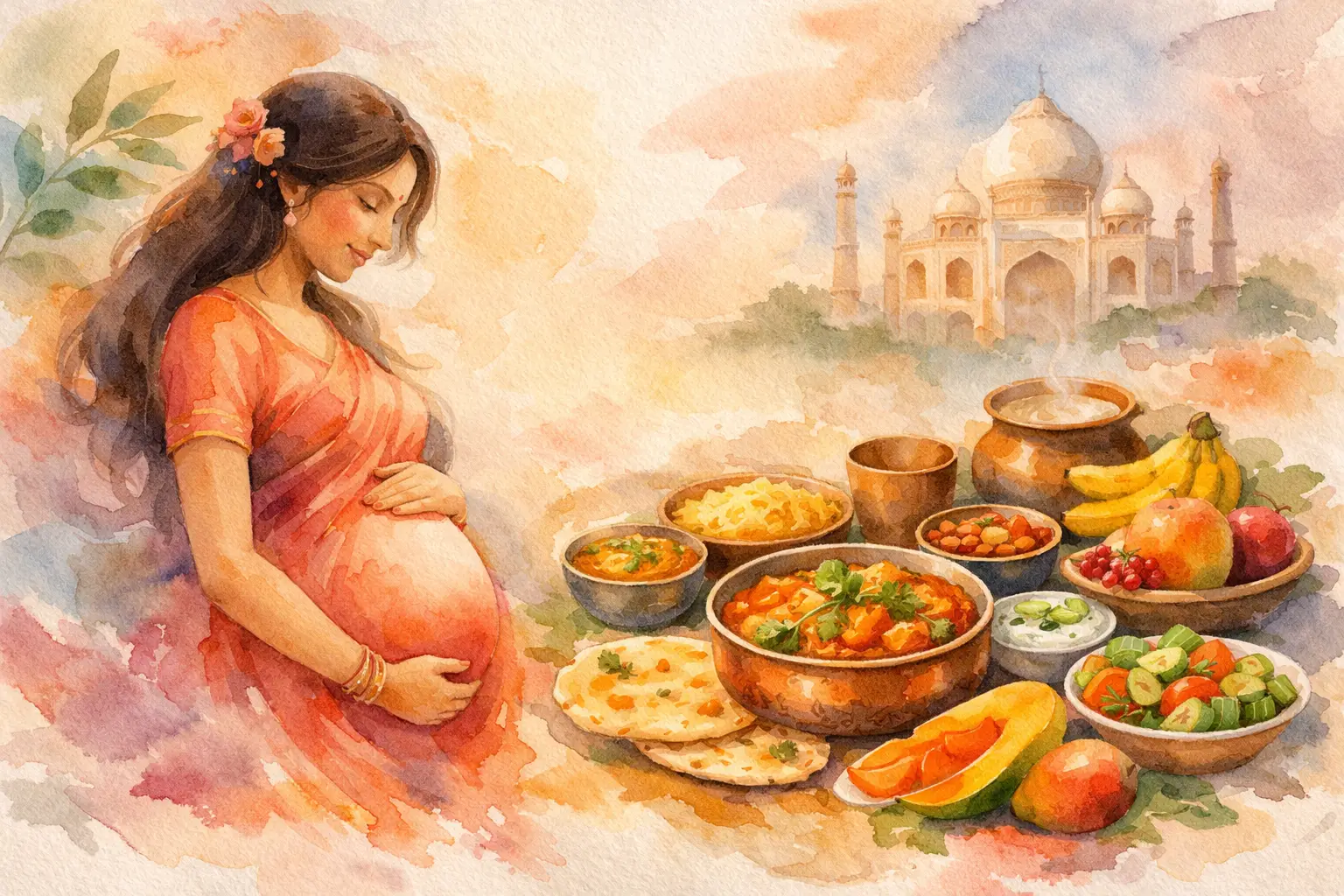
A warm bowl of dal-chawal, vegetable paratha with curd, or a handful of roasted chana can do far more for pregnancy nutrition than an expensive “superfood” routine. Indian foods for healthy pregnancy can be nourishing, familiar and practical, provided meals are planned around your changing needs rather than simply eating more.
Pregnancy is not the time for restrictive diets, skipped meals or following every food rule shared by friends and family. Your body needs steady energy, quality protein, iron, calcium, fibre and key vitamins to support your health and your baby’s development. The right balance will depend on your trimester, appetite, weight pattern, blood test results, activity level and any concerns such as nausea, gestational diabetes, thyroid conditions or low haemoglobin.
Build a balanced Indian pregnancy plate
A healthy pregnancy meal does not need to look complicated. Aim to include a carbohydrate for energy, a protein source, vegetables or fruit, and a healthy fat across your main meals. For example, roti with palak dal and mixed vegetables is more balanced than plain roti and sabzi alone. Similarly, vegetable poha becomes more filling when served with peanuts, sprouts or curd.
Whole grains such as atta roti, brown or hand-pounded rice, oats, daliya, jowar, bajra and ragi can provide sustained energy and fibre. You do not need to replace every familiar grain at once. If brown rice feels too heavy or unappealing, a sensible portion of regular rice with dal, vegetables and salad can still fit well into a healthy plan.
Protein deserves special attention because requirements rise during pregnancy. Include a protein-rich food at every meal where possible: dals, chana, rajma, lobia, sprouts, paneer, curd, milk, eggs, fish, chicken or lean meat, depending on your food preferences. A vegetarian diet can support a healthy pregnancy, but it needs thoughtful planning so that protein, iron, vitamin B12 and omega-3 intake are not overlooked.
Everyday Indian foods that support pregnancy nutrition
Dal, beans and pulses for protein and iron
Moong dal, masoor dal, toor dal, chana dal, rajma and kala chana are affordable foods that offer protein, fibre and iron. Pair them with vitamin C-rich foods such as lemon, amla, guava, oranges, tomatoes or capsicum to help your body absorb plant-based iron better.
If bloating is a concern, start with lighter options such as moong dal, use well-soaked beans, and keep portions moderate. Pregnancy hormones can slow digestion, so a food that was easy to tolerate before may need a different preparation now.
Dairy, ragi and sesame for calcium
Milk, curd, paneer and unsweetened lassi can help meet calcium and protein needs. Curd may be especially useful when nausea makes heavier meals difficult. Ragi porridge, ragi dosa or ragi roti can add variety, while sesame seeds can be used in chutneys, laddoos or sprinkled over salads in small amounts.
Choose pasteurised dairy products and keep sweetened drinks and desserts occasional. A large glass of flavoured milk every day may add more sugar than nutrition, particularly if you are managing blood sugar levels.
Green vegetables, fruit and nuts for micronutrients
Palak, methi, bathua, broccoli, beans, gourds, carrots and beetroot bring folate, fibre and a range of vitamins to the plate. Do not rely only on beetroot for iron. It is healthy, but iron status is best supported by a wider pattern that includes pulses, greens, nuts, seeds and prescribed supplements when needed.
For snacks, fruit with nuts is usually more satisfying than biscuits or fried namkeen. Bananas can be helpful for quick energy, guava provides vitamin C and fibre, and seasonal fruit is a simple everyday choice. A small handful of almonds, walnuts, peanuts or roasted chana can add healthy fats and protein. Keep portions sensible, as nuts are nutrient-dense but also high in calories.
Eggs, fish and lean meats when included
Eggs are a convenient source of protein and choline, a nutrient involved in your baby’s brain development. Fully cooked eggs, chicken and lean meat can be included as part of a balanced diet. Fish can provide protein and omega-3 fats, but choose low-mercury varieties and ensure it is thoroughly cooked.
Avoid raw or undercooked eggs, meat and fish. Also avoid unpasteurised milk products and foods that have been left unrefrigerated for long periods. Food safety matters more in pregnancy because food-borne infections can be serious.
Meal ideas for busy days and low appetite
Nausea, heartburn and tiredness often make ideal meal plans difficult to follow. Smaller, regular meals may feel better than three large meals. Keeping dry snacks such as plain crackers, roasted makhana or a small banana beside the bed can help if morning nausea is strong.
Breakfast could be vegetable upma with curd, besan chilla with paneer, idli with sambar, oats with milk and fruit, or an egg bhurji wrap. For lunch, try roti with dal, seasonal sabzi and curd, or rice with rajma and a cucumber salad. Dinner may be a lighter version of lunch, khichdi with vegetables and curd, or millet roti with paneer bhurji and cooked vegetables.
If heartburn is frequent, reduce very oily, spicy and large late-night meals rather than cutting out all Indian spices. Eat slowly, avoid lying down immediately after meals and identify your own triggers. Some people tolerate a mild homemade curry well, while others find tomatoes, fried foods or strong chilli uncomfortable.
Supplements are support, not a replacement for meals
Folic acid, iron, calcium, vitamin D and other supplements may be recommended by your obstetrician based on your stage of pregnancy and blood results. Take them as prescribed. Food alone may not correct significant anaemia or meet every requirement, particularly when appetite is low or dietary restrictions are present.
At the same time, supplements cannot replace balanced meals. Iron tablets may cause constipation or nausea for some women, so your clinician may adjust timing or type. Building fibre, fluids, fruit, vegetables and protein into your daily routine can make the overall plan easier to sustain.
When a personalised pregnancy plan is worth it
Generic pregnancy diet charts can be misleading because no two pregnancies are the same. A woman with gestational diabetes may need to distribute carbohydrates more carefully. Someone with severe nausea may need a plan built around tolerated foods. Vegetarian women, women carrying twins, those with thyroid concerns, anaemia, high blood pressure or rapid weight changes may benefit from closer nutrition support.
A personalised plan should work with your household meals, work schedule, cultural preferences and budget. It should not make you fear rice, fruit, ghee or normal home-cooked food. At LivFit Today, pregnancy nutrition guidance focuses on realistic meals and measurable health goals, while working alongside your obstetrician’s medical advice.
The most helpful pregnancy diet is usually not the most complicated one. It is the one you can eat consistently: a colourful, protein-aware Indian plate, regular meals, safe food habits and guidance that respects what your body is telling you.