A rushed Tuesday evening is where most healthy eating plans fall apart. You reach home hungry, the dal still needs cooking, and ordering takeaway suddenly feels easier than making the balanced meal you intended to eat. Learning how to meal prep indian food changes that moment. It gives you familiar, satisfying meals that are ready quickly, without turning your Sunday into an exhausting day in the kitchen.
Indian food is particularly well suited to meal preparation because many dishes share the same foundations: onions, tomatoes, ginger, garlic, spices, lentils, vegetables and wholegrains. The goal is not to eat the exact same curry for five days. It is to prepare flexible building blocks that make a nourishing plate feel realistic on your busiest days.
How to meal prep Indian food without eating boring meals
The biggest meal-prep mistake is cooking too much of one complete dish. A large pot of rajma may be convenient, but it can become unappealing by day four. Instead, think in components. Prepare one or two protein-rich dishes, a vegetable base, a carbohydrate source and fresh additions that can be mixed differently through the week.
For example, a batch of chana masala can become lunch with brown rice, dinner with two phulkas, or a filling bowl with cucumber, carrots and curd. Roasted vegetables can sit beside dal one day and be folded into a wrap the next. This approach creates variety while keeping cooking time low.
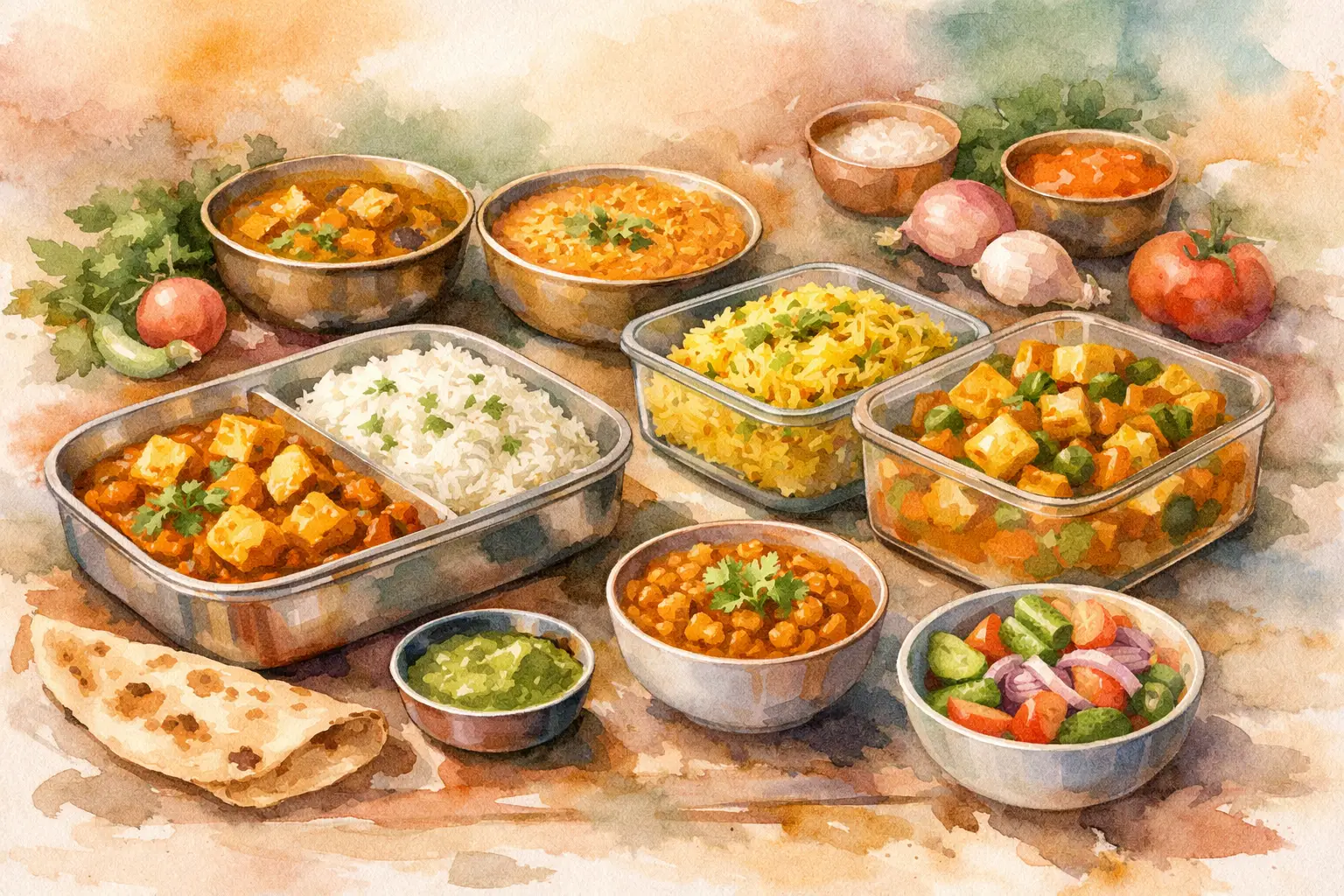
Before you shop, choose four to six meals you genuinely enjoy and can make with overlapping ingredients. A practical week might include moong dal, paneer bhurji or egg bhurji, chana masala, mixed vegetable sabzi, rice or millet, and rotis. If you eat non-vegetarian food, grilled chicken tikka, fish cooked with simple spices, or keema can replace one of the vegetarian protein options.
Your plan should fit your household, work schedule and health goals. Someone focused on fat loss may need more vegetables and protein at each meal, while an active person training regularly may need larger portions of rice, roti or poha. For diabetes, thyroid concerns, high blood pressure, pregnancy or a medical condition, the right portions and meal timings are personal. A generic online plan cannot account for your medicines, blood markers or appetite patterns.
Start with a balanced Indian plate
Healthy meal prep is not about removing rice, rotis or all the foods you love. Sustainable progress comes from balance, portion awareness and consistency. A useful starting point is to fill roughly half your plate with non-starchy vegetables, reserve a quarter for protein, and use the remaining quarter for wholegrain carbohydrates or starchy vegetables.
Protein deserves special attention because many people eat a carb-heavy breakfast and lunch, then feel hungry soon afterwards. Include dal, beans, curd, paneer, tofu, eggs, fish, chicken or lean meat regularly. Pairing protein with fibre-rich vegetables and measured portions of carbohydrates helps support fullness, energy and steadier eating habits.
You do not need to make every dish low-fat. A small amount of oil, ghee, coconut or nuts can make meals more satisfying and improve flavour. The difference lies in using them intentionally rather than letting every tadka, curry and snack become oil-heavy. Measure cooking oil for a week or two if you are unsure of your usual quantity. It often reveals small changes that can make a meaningful difference over time.
Build your prep session around components
Set aside 90 minutes to two hours once or twice a week. If Sunday is busy, prepare a few basics on Sunday and refresh vegetables or rotis on Wednesday. Splitting the work is often more sustainable than trying to prepare every meal for seven days at once.
Begin by washing, chopping and storing vegetables. Onion, tomato, beans, carrots, capsicum, cauliflower, bottle gourd, spinach and cabbage can be prepped according to the dishes you have planned. Keep watery vegetables, such as cucumber, separate and cut them closer to eating time so they stay crisp.
Next, cook your core dishes. One pot of dal and one bean-based curry offer excellent variety. You could prepare masoor dal with spinach and a lightly spiced chole, then make a dry vegetable sabzi such as cabbage peas or bhindi. A cooked tomato-onion masala base can also save time: use it later for paneer, egg curry, chicken curry or mixed vegetables.
Cook grains in sensible amounts. Rice, quinoa, millet and cooked oats store well, while fresh rotis are often preferable for texture. If making rotis daily is difficult, prepare the dough in advance and keep it covered in the fridge for a day or two. You can also cook and cool rice before portioning it, which prevents the familiar problem of serving more than you planned when hungry.
Finally, add fresh, quick items that make meals feel complete. Whisk curd with roasted cumin and coriander for a simple raita. Prepare mint chutney with limited salt. Keep fruit, roasted chana, makhana or unsweetened yoghurt available for snacks, rather than relying on biscuits when hunger strikes between meetings.
Store food safely and make it last
Meal prep only helps when the food remains safe and enjoyable. Allow cooked food to cool promptly, then place it in clean, shallow, airtight containers. Avoid leaving large pots of curry at room temperature for hours, particularly during warmer weather. Refrigerate portions you will eat within three to four days and freeze extra servings early, rather than waiting until the food is nearly past its best.
Label containers with the dish and date. This small habit prevents waste and makes weekday decisions easier. Keep salad ingredients, chutneys and yoghurt-based sides separate from hot dishes. Reheat curries, dals and rice thoroughly until piping hot, and avoid reheating the same portion repeatedly.
If your work commute is long, use an insulated lunch bag with an ice pack where possible. This matters even more for curd, paneer, eggs, chicken and fish. Convenience should support your health, not create unnecessary food-safety risks.
Turn one prep into different Indian meals
A flexible menu stops meal prep from becoming repetitive. At breakfast, use pre-chopped vegetables in besan chilla, vegetable omelette, savoury oats or poha. Adding curd, eggs, paneer or sprouts can make breakfast more filling than tea and toast alone.
For lunch, combine dal or chole with a measured serving of rice, a vegetable sabzi and salad. For dinner, make the same protein feel different by pairing it with rotis, soup and sautéed vegetables. Leftover paneer bhurji can become a wholewheat wrap with onion, tomato and mint curd; cooked chicken can be added to a millet bowl with vegetables and lemon.
Do not overlook snacks, because this is where many carefully planned days go off course. If you regularly feel ravenous at 5 pm, your meal plan needs a planned snack rather than more willpower. Fruit with nuts, buttermilk, sprouts chaat, roasted chana, yoghurt with seeds, or a small paneer sandwich can bridge the gap between lunch and dinner.
Adjust meal prep to your actual goal
For weight management, meal prep works best when it removes impulsive choices without creating deprivation. Keep favourite foods in the plan, but decide portions before you are hungry. You may enjoy biryani, parathas or a family dessert occasionally while still making steady progress if most meals support your energy needs and goals.
For a family, avoid making a separate restrictive meal for one person. Make one balanced base meal, then adjust portions. Children, older adults, pregnant women and highly active people may need different quantities and nutrient priorities. For example, a child may need an additional snack, while a person managing blood sugar may benefit from more consistent carbohydrate portions across the day.
If you have PCOS, diabetes, kidney disease, digestive symptoms, high blood pressure or a history of disordered eating, avoid copying social-media meal plans. The ingredients may be wholesome, but the quantity, timing and nutrient balance still need professional consideration. Personalised guidance makes healthy living safer, more effective and far easier to maintain.
Make consistency the real win
Your first week does not need colour-coded containers or twelve perfectly prepared recipes. Start with two breakfasts, two lunches and planned snacks for the days you are usually busiest. Notice what gets eaten, what goes to waste and when cravings are strongest. Then adjust.
At LivFit Today, we see that lasting results come from plans built around real routines, family meals and individual health needs, not from starving yourself through another short-term diet. Prepare food that you look forward to eating, leave room for flexibility, and let each organised meal become one less obstacle between you and the healthier life you want.