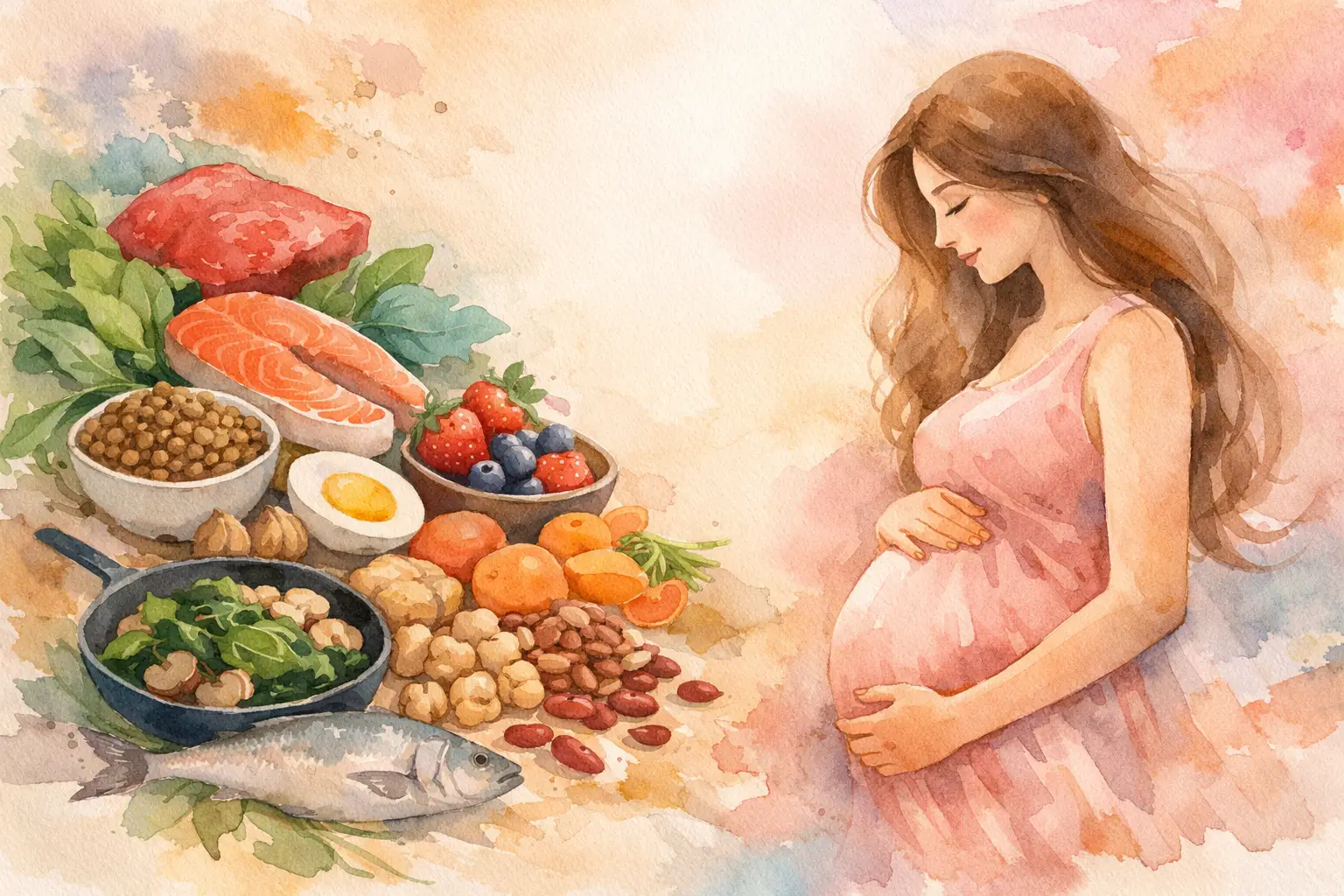
Feeling unusually breathless on the stairs, exhausted by mid-afternoon, or unable to focus can make pregnancy feel harder than it needs to. When looking for the best iron rich foods in pregnancy, the goal is not to follow a restrictive diet. It is to build regular meals that support your growing baby, protect your energy and work with the foods you genuinely enjoy eating.
Iron needs rise during pregnancy because your body is making more blood and supporting your baby’s development. Low iron is common, particularly if nausea, food aversions, vegetarian eating, closely spaced pregnancies or a pre-existing low iron level are part of your picture. The good news is that smart food choices can make a meaningful difference, alongside the antenatal checks and supplements your clinician recommends.
Why iron matters during pregnancy
Iron helps make haemoglobin, the protein in red blood cells that carries oxygen around your body. During pregnancy, your blood volume increases significantly. Without enough iron, you may develop iron deficiency or iron-deficiency anaemia.
Some tiredness is expected when you are pregnant, especially in the first and third trimesters. But persistent fatigue, weakness, dizziness, headaches, shortness of breath, heart palpitations or looking unusually pale deserve a conversation with your midwife, GP or obstetric team. These symptoms can have several causes, so do not try to diagnose or treat anaemia by yourself.
A blood test is the only reliable way to confirm whether your iron stores are low. Food is a powerful foundation, but a diagnosed deficiency often needs an iron supplement in the dose and form advised by your healthcare professional.
Best iron rich foods for pregnancy
Not all iron is absorbed in the same way. Haem iron, found in animal foods, is generally easier for the body to absorb. Non-haem iron comes from plant foods and is still highly valuable, especially when paired with vitamin C.
Animal sources of iron
If you eat meat, moderate portions of lean red meat can be one of the most efficient ways to increase iron intake. Well-cooked lamb, beef and goat meat can fit into a balanced pregnancy diet once or twice a week, depending on your preferences, overall health and dietary pattern. Choose freshly cooked meals and ensure meat is thoroughly cooked with no pink centre.
Chicken and fish also provide iron, although generally less than red meat. Eggs are another practical option for busy mornings or light dinners. Have eggs thoroughly cooked, including the yolk, unless you are using eggs produced to the relevant safety standard and have been advised otherwise by your care team.
Liver is often described as an iron-rich food, but it is not recommended during pregnancy because it can contain very high levels of vitamin A. More is not always better in pregnancy nutrition, and this is a clear example of why food advice needs context.
Plant sources that work hard for you
A well-planned vegetarian or predominantly plant-based diet can support iron intake. The key is to include iron-containing foods consistently, rather than relying on one occasional “healthy” meal.
Lentils, dals, chickpeas, kidney beans, black-eyed beans and soybeans are excellent everyday choices. A bowl of rajma with rice, chana chaat with lemon, moong dal cheela, sambar with vegetables, or a comforting dal and roti meal can all contribute useful iron.
Dark green leafy vegetables such as spinach, amaranth leaves, mustard greens and fenugreek leaves provide non-haem iron along with folate and fibre. Cooked greens are often easier to eat in useful portions than raw salad leaves. Add them to dal, parathas, curries, soups or a vegetable stir-fry.
Tofu, tempeh, soya chunks, ragi, quinoa, iron-fortified breakfast cereals, pumpkin seeds, sesame seeds, cashews, almonds, raisins and dried apricots can also help. Dried fruit and nuts are nutritious but calorie-dense, so a small handful or measured portion is usually enough. If you have gestational diabetes or have been advised to monitor blood glucose, discuss dried fruit portions with your dietitian.
Help your body absorb more iron
The meal around an iron-rich food matters almost as much as the food itself. Vitamin C improves absorption of non-haem iron, so pair plant sources with colourful fruit or vegetables.
For example, squeeze lemon over dal, chana or leafy greens. Have guava, orange, kiwi, strawberries, tomatoes, capsicum or amla alongside an iron-rich meal. A simple tomato and cucumber salad with lemon can make an everyday lunch work harder for you.
Tea and coffee can reduce iron absorption when taken with meals because of their natural compounds. You do not necessarily have to give them up completely, but try to leave a gap of around one to two hours between tea or coffee and your main iron-rich meals or prescribed iron supplement. Pregnancy caffeine guidance still applies, so keep your total intake within the limit advised by your antenatal team.
Calcium is essential for your baby’s bones and your own health, but large calcium doses can interfere with iron absorption when taken at the same time. If you use calcium and iron supplements, ask your clinician or pharmacist about the best timing. This does not mean avoiding dairy – it simply means spreading key nutrients sensibly through the day.
A realistic iron-focused day of eating
A sustainable plan should fit your appetite, work schedule and cooking routine. You do not need elaborate recipes. A practical day might begin with vegetable poha topped with peanuts and a side of fruit, or eggs with wholegrain toast and tomatoes.
At lunch, try rajma, chana or dal with roti or rice, cooked greens and a lemony salad. For an afternoon snack, choose roasted chana with fruit, a yoghurt bowl at a separate time from an iron-focused meal, or a small portion of nuts and seeds.
Dinner could be well-cooked chicken or lean meat with vegetables and wholegrains, or tofu and mixed vegetable curry with ragi roti. If nausea makes full meals difficult, smaller meals more often may be easier. Even a few bites of iron-containing food at each eating occasion can be more achievable than forcing a large plate.
Common mistakes to avoid
The first mistake is relying on spinach alone. Spinach is nutritious, but it should be one part of a varied iron strategy that includes pulses, grains, seeds, fortified foods and, if you eat them, animal sources.
The second is assuming a supplement replaces food. Supplements may be necessary, but meals provide protein, fibre, folate, vitamin C and other nutrients that support a healthy pregnancy. They also help create habits that remain useful after birth.
Finally, do not start high-dose iron tablets based only on tiredness or online advice. Iron can cause nausea, constipation, stomach discomfort and dark stools, and the right dose depends on your blood results and medical history. Your clinician may suggest a different formulation or timing if side effects make it difficult to continue.
When personalised advice helps
Your needs may be different if you are vegetarian, carrying twins, managing diabetes, have thyroid concerns, have had bariatric surgery, struggle with severe nausea, or have previously had anaemia. A personalised pregnancy meal plan can balance iron with protein, calcium, folate, fibre and your changing appetite without turning food into another source of stress.
At LivFit Today, pregnancy nutrition support is built around your medical history, cultural food preferences and daily routine, so the plan is realistic enough to follow beyond one good week. Keep your antenatal appointments, take prescribed supplements as directed, and let every meal be a small, practical step towards feeling better supported through pregnancy.