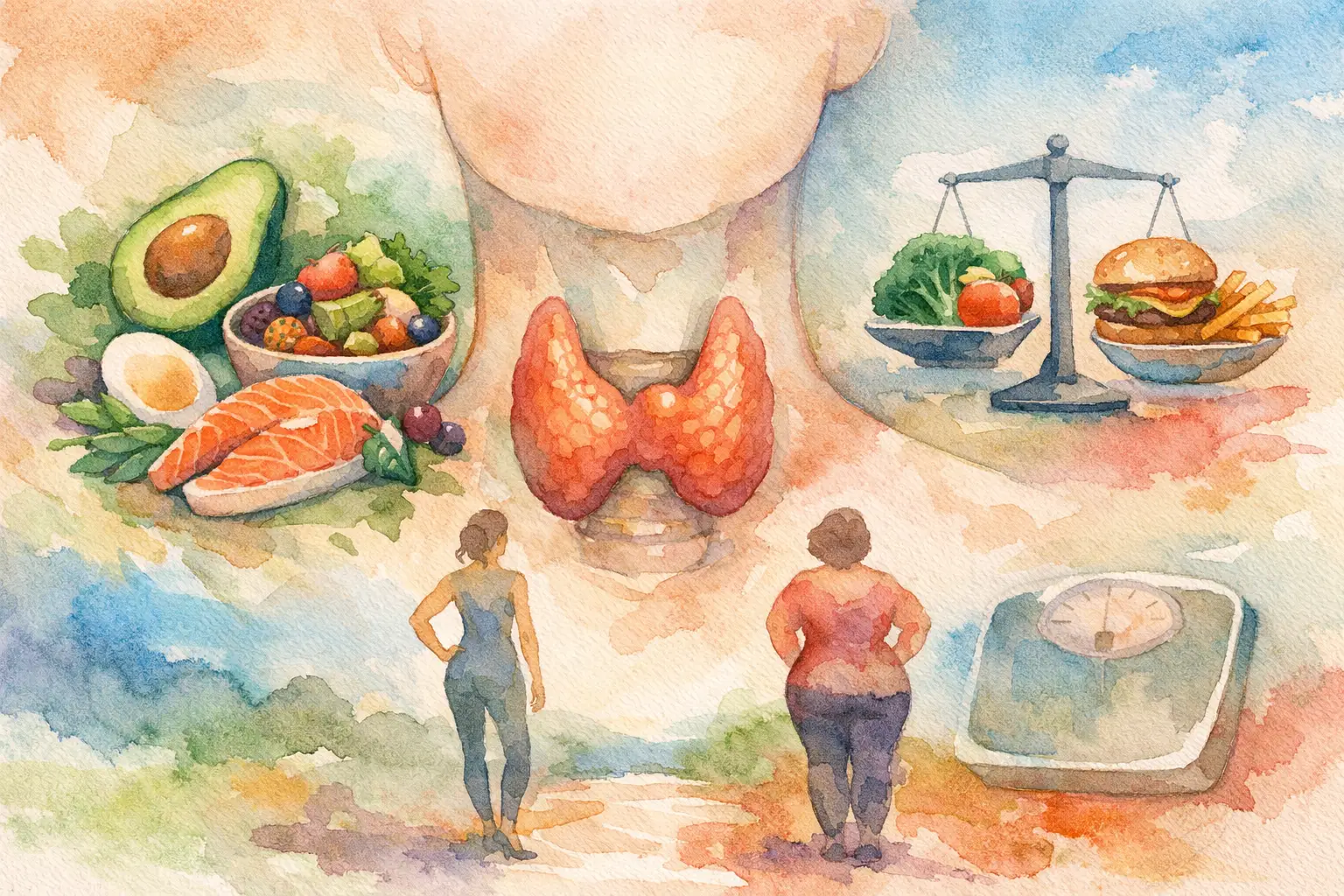
One week the scales barely move, the next your clothes feel tighter, and all the usual advice about “eating less and moving more” suddenly feels far too simple. Nutrition for thyroid weight changes needs a more careful approach because appetite, energy, digestion and body weight can all shift when thyroid function is not in balance.
If you are dealing with hypothyroidism, hyperthyroidism, or weight fluctuations linked to thyroid treatment, the goal is not to chase fast results. It is to create a way of eating that supports your body, protects muscle, improves consistency and helps you feel better in daily life. That is where the right nutrition plan makes a real difference.
Why thyroid issues can affect weight so differently
The thyroid helps regulate how your body uses energy. When thyroid hormone levels drop, as in hypothyroidism, metabolism may slow down, fatigue can increase and you may feel less active without even realising it. Some people also notice constipation, low mood, fluid retention and stronger cravings for quick energy foods. Weight gain is not always dramatic, but it can feel stubborn.
With hyperthyroidism, the pattern can look completely different. Weight loss may happen even when appetite increases. Some people feel hungrier, more anxious, more restless and less able to maintain a steady eating routine. Once treatment starts and thyroid levels begin to settle, weight can shift again.
This is why generic weight-loss diets often fail people with thyroid concerns. The issue is not simply willpower. Your symptoms, medication timing, sleep, stress and food habits all interact.
Nutrition for thyroid weight changes starts with balance
The biggest mistake people make is going too extreme. They cut carbs entirely, skip meals, avoid whole food groups or eat very little hoping to “reset” their metabolism. In practice, that often backfires. Low energy gets worse, cravings rise, workouts feel harder and consistency drops.
A better approach is balanced nutrition built around regular meals, enough protein, fibre-rich carbohydrates and healthy fats. This supports steadier blood sugar, better fullness and more predictable energy through the day.
For many adults, three structured meals work well. Some also do better with one planned snack, especially if they struggle with evening overeating or long gaps between meals. The exact pattern depends on your routine, hunger levels and medication schedule.
Protein matters more than most people realise
Protein is especially useful when thyroid-related weight changes are part of the picture. It helps preserve lean muscle, which matters for metabolic health, and it can make meals more satisfying. If weight has increased with hypothyroidism, higher-protein meals can reduce the urge to graze constantly. If weight has dropped with hyperthyroidism, protein helps support recovery and strength.
Practical options include eggs, Greek yoghurt, paneer, tofu, dal, beans, fish, chicken and milk. You do not need to build every meal around complicated recipes. Even simple combinations such as vegetable omelette with toast, dal with rice and curd, or grilled fish with roti and salad can work very well.
Do not fear carbohydrates, choose them well
Carbohydrates are often blamed first when weight changes happen, but cutting them too hard is rarely the answer. Better quality carbohydrates can support energy, bowel regularity and appetite control, which are all relevant in thyroid management.
Aim for options such as oats, roti, brown rice, millets, fruit, sweet potato, beans and vegetables. The key is portion awareness and pairing carbs with protein and fibre, not removing them completely. For example, fruit on its own may not keep you full for long, but fruit with nuts or yoghurt is more balanced.
Fat also has a place on the plate
Healthy fats help with meal satisfaction and support overall nutrition. Nuts, seeds, olive oil, groundnut oil, avocado and oily fish can all fit into a thyroid-friendly plan. The issue is quantity. These foods are nutritious but energy-dense, so portions still matter if fat loss is your goal.
Key nutrients that support thyroid health
Food alone does not “cure” a thyroid disorder, and no single superfood will fix hormone imbalance. Still, certain nutrients play an important supporting role.
Iodine is needed for thyroid hormone production, but more is not always better. In the UK and India alike, people sometimes start taking iodine supplements on their own, which can be unhelpful or even risky in some thyroid conditions. It is better to get iodine from normal dietary sources such as dairy, eggs and fish unless your doctor advises otherwise.
Selenium is another nutrient linked with thyroid function. Good food sources include eggs, fish, sunflower seeds and whole grains. Zinc and iron also matter, especially if you are tired, have poor appetite control or are dealing with hair fall alongside thyroid concerns. Low iron stores, for example, can sit alongside thyroid issues and make fatigue worse.
Vitamin D and B12 are also worth attention in some people, particularly if energy is low or dietary variety is poor. The right step here is not random supplement shopping but testing and professional advice where needed.
Foods to be careful with, not frightened of
There is a lot of confusion around soy, cruciferous vegetables and gluten. Most people do not need to remove these foods automatically.
Cruciferous vegetables such as cabbage, cauliflower and broccoli are often labelled “bad for thyroid”. In reality, normal cooked portions are usually absolutely fine and they offer fibre, vitamins and support for general health. Soy foods can also be included, but timing matters if you take thyroid medication, as some foods and supplements may affect absorption.
Gluten only needs to be avoided if you have coeliac disease, gluten sensitivity, or specific medical advice to do so. A gluten-free diet is not a standard treatment for every thyroid patient. Removing foods without a clear reason can make your diet more restrictive and harder to maintain.
Timing matters with thyroid medication
One of the most overlooked parts of nutrition for thyroid weight changes is not what you eat, but when you eat in relation to your medicine. Thyroid medication is commonly taken on an empty stomach, and certain foods or supplements can interfere with absorption.
Calcium, iron and high-fibre meals taken too close to medication may reduce how well it works for some people. Coffee can also be an issue if taken immediately with tablets. This does not mean these foods are bad. It means timing should be planned properly.
If your medication routine is inconsistent, your symptoms and weight changes may feel inconsistent too. Follow your prescribing doctor’s instructions carefully and stick to the same pattern each day where possible.
Practical meal habits that make weight management easier
When energy is low, people often rely on biscuits, takeaways or long gaps between meals followed by overeating at night. The problem is not lack of information. It is that symptoms make good habits harder to carry out.
That is why simple structure works better than perfection. Build meals around protein first, add vegetables where practical, choose a sensible portion of carbohydrate and keep easy options at home for busy days. Curd, fruit, roasted chana, boiled eggs, nuts, soup and pre-cut vegetables can prevent the all-or-nothing pattern that stalls progress.
If constipation is part of hypothyroidism, hydration and fibre deserve attention. Increase fibre gradually through fruit, vegetables, oats, pulses and seeds, and make sure fluid intake rises alongside it. If your digestion is poor and you suddenly eat very high fibre, you may just feel more bloated.
If you are losing weight unintentionally with hyperthyroidism or during treatment changes, nutrition needs to focus less on restriction and more on adequacy. That might mean slightly larger meals, easy-to-digest snacks and more attention to protein and overall calorie intake.
Why personalisation matters in thyroid-related weight changes
Two people can have the same thyroid diagnosis and need very different nutrition advice. One may be struggling with weight gain, insulin resistance and emotional eating. Another may be recovering from unplanned weight loss, poor appetite and muscle weakness. A woman in postpartum recovery will have different needs from a desk-based professional managing stress and irregular meals.
This is exactly why personalised support matters. At LivFit Today, the focus is not on starvation diets or temporary fixes. It is on building a realistic food routine around your reports, lifestyle, symptoms and goals so the plan works in your actual life.
When progress feels slow
Slow progress does not always mean your plan is failing. Thyroid-related weight changes can take time to settle, especially if medication is being adjusted or sleep, stress and menstrual health are also affecting your body. Sometimes the early wins show up as better energy, reduced bloating, fewer cravings or improved routine before the scales respond clearly.
That is still progress. Sustainable change is not dramatic every week, but it is far more likely to last.
If your body has been sending mixed signals, treat that as a reason to become more strategic, not more extreme. Eat enough, eat consistently, respect your medication routine and give your nutrition plan the kind of structure your thyroid situation actually needs. Small steady choices tend to do far more than aggressive diets ever will.